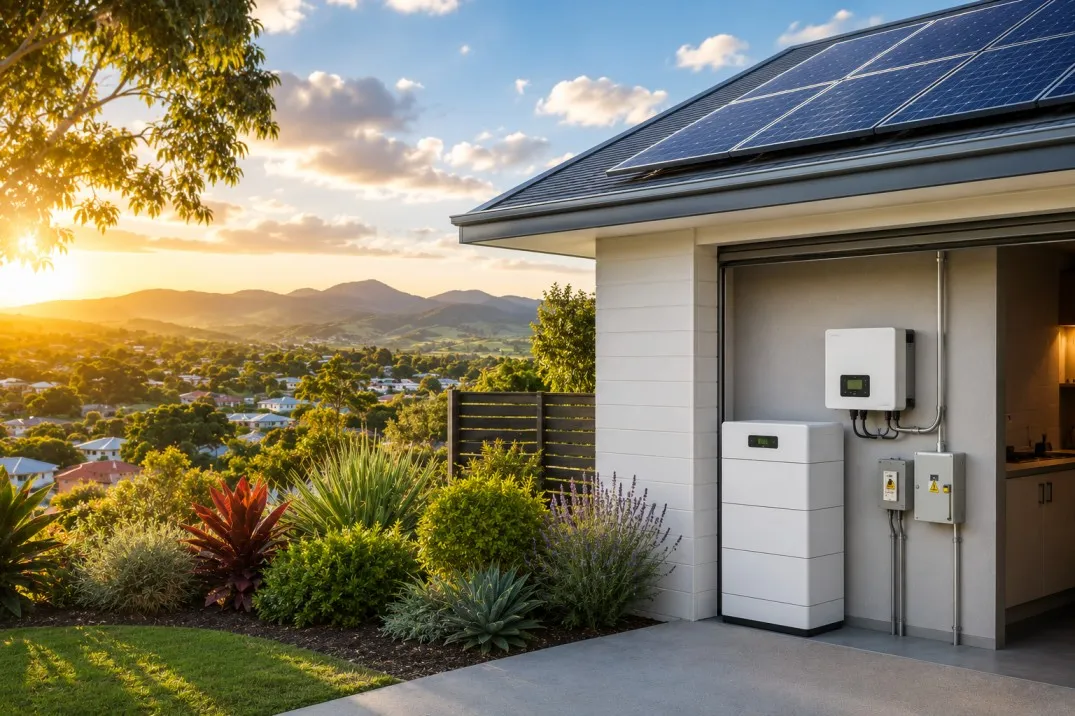
Home battery storage has become an increasingly important consideration for Australian households looking to make better use of rooftop solar. For homeowners in Canungra and the surrounding Gold Coast hinterland, batteries can be particularly relevant when planning for evening energy use, greater energy independence and, with an appropriately designed system, backup power.
The upfront cost of battery storage has traditionally been one of the biggest barriers to installation. Government incentives can help change the financial equation, but eligibility rules, battery specifications and installation requirements need to be understood before making a purchase.
For people researching battery rebate Canungra, the most important current incentive is the Australian Government’s Cheaper Home Batteries Program. It provides support for eligible battery systems connected to new or existing rooftop solar through the Small-scale Renewable Energy Scheme.
However, a rebate or discount should never be viewed in isolation. Battery size, household consumption, solar generation, installation costs and long-term savings all need to be considered when deciding whether a battery represents good value.
Understanding the Current Battery Incentive Available in Canungra
The main nationwide battery incentive available to eligible Canungra households and businesses is the Australian Government’s Cheaper Home Batteries Program.
Introduced on 1 July 2025, the program reduces the upfront cost of eligible small-scale battery systems installed alongside new or existing rooftop solar.
Rather than operating like a traditional cash rebate paid directly to every homeowner after installation, the incentive is delivered through the Small-scale Renewable Energy Scheme using small-scale technology certificates, commonly called STCs.
In practice, the benefit is generally passed on through participating solar and battery retailers or installers as an upfront discount.
Homeowners researching battery rebate Canungra can review the current rules through the Australian Government’s Cheaper Home Batteries Program.
Because program settings can change over time, always check current eligibility and discount calculations before signing an installation contract.
How Much Can the Battery Incentive Save?
You may see the Cheaper Home Batteries Program described as providing around a 30% discount on eligible battery installation costs.
That figure is a useful general guide, but homeowners should not assume that every battery installation will receive an exact 30% reduction.
The incentive is linked to the number and value of STCs that an eligible battery system can create. The actual financial benefit can therefore depend on factors including battery capacity, current program rules, certificate values and how the installer applies the discount.
Program settings have also been adjusted since the scheme began.
From 1 May 2026, changes were introduced to better target support according to battery size. This makes it especially important to obtain a current calculation rather than relying on rebate figures advertised when the program first launched.
When comparing battery rebate Canungra quotes, ask the provider to clearly show the battery price, installation costs and incentive applied so you can understand the final amount you are expected to pay.
Which Battery Sizes Can Qualify?
Battery size is an important part of current eligibility.
Under the program rules in effect in 2026, battery systems with a nominal capacity from 5 kWh to 100 kWh can be eligible, subject to meeting all other program requirements.
However, support is not unlimited for larger systems.
STCs are provided only for eligible usable capacity up to the program limit. Under the current rules, systems larger than 50 kWh and up to 100 kWh can still qualify, but support does not extend beyond the first 50 kWh of eligible usable capacity.
The incentive structure also varies according to battery size under the tiered arrangements introduced in 2026.
This is relevant for Canungra because rural homes and commercial or hinterland properties can have very different energy requirements from typical suburban households.
Do not choose an unnecessarily large battery simply to maximise a rebate. Battery capacity should primarily reflect your energy consumption, solar generation, backup objectives and budget.
Does the Battery Need to Be Connected to Solar?
The federal battery incentive is designed around battery storage connected with rooftop solar.
Eligible batteries can be installed alongside a new rooftop solar system or connected to an existing eligible solar installation, provided the applicable program requirements are met.
For homeowners researching battery rebate Canungra who already have solar panels, this means replacing the entire solar system may not necessarily be required.
However, compatibility needs to be assessed.
Your existing inverter, solar array capacity and electrical configuration can influence how a battery is integrated. Some installations may require additional equipment or changes to the existing system.
A site assessment can help establish whether the current solar installation is suitable and what work would be required to add battery storage.
Rebate Eligibility Is About More Than Location
Living in Canungra does not automatically make a property eligible for a battery incentive.
Likewise, simply purchasing a battery does not guarantee access to the federal discount.
Eligibility depends on meeting the program requirements that apply to the battery, installation and associated equipment.
The battery must fall within eligible capacity limits and satisfy relevant product and installation requirements. The system must also meet the conditions of the Small-scale Renewable Energy Scheme.
The Australian Government states that battery systems considered installed on or after 1 July 2025 may be eligible, subject to meeting all applicable requirements. For this purpose, the installation date is linked to the relevant electrical compliance documentation.
Before purchasing a system based on an advertised battery rebate Canungra amount, ask the installer to confirm why the proposed equipment and installation are expected to qualify.
Is There a Separate Queensland Battery Rebate?
Queensland previously operated the Battery Booster program, which provided eligible households with rebates towards approved battery installations.
That earlier scheme should not be confused with the current federal Cheaper Home Batteries Program.
When researching incentives in 2026, homeowners may still encounter older articles referring to Queensland rebates of $3,000 or $4,000. Those figures relate to the earlier Battery Booster initiative rather than a general current rebate automatically available to every new Canungra battery installation.
For this reason, always check the date and status of information found online.
Current Queensland guidance about home batteries, system configurations and financial considerations is available through the Queensland Government’s Battery Buyers Guide.
The main broadly available incentive relevant to eligible Canungra battery installations in 2026 is the federal Cheaper Home Batteries Program. Other targeted programs or financing arrangements may have different eligibility conditions and should be checked separately.
Why Battery Cost Should Be Considered After the Incentive
When comparing battery systems, focus on the net installed cost rather than the advertised retail price alone.
Suppose two batteries have different upfront prices but also differ in capacity, power output, warranty terms, installation complexity and available incentive.
Simply choosing the system with the largest advertised rebate may not produce the best financial result.
Instead, compare:
- The complete installed price before incentives.
- The estimated incentive or STC discount.
- The final amount payable.
- Usable battery capacity and power output.
- Warranty coverage and expected operating life.
- Solar compatibility and backup functionality.
- Expected household energy savings.
This approach provides a clearer picture of value when comparing battery rebate Canungra options.
How Battery Size Influences Costs and Savings
Choosing the correct battery capacity is one of the most important financial decisions in a battery project.
A larger battery generally costs more, even if government support reduces part of the upfront expense.
The question is whether your household can make effective use of that additional capacity.
Consider how much excess solar electricity your system typically generates during the day and how much electricity you consume when solar generation is low.
If a battery is regularly much larger than the available excess solar generation, you may not use its full capacity as effectively as expected.
On the other hand, a battery that is too small may provide limited stored energy for evening consumption or backup priorities.
A battery rebate Canungra assessment should therefore start with energy usage and solar generation rather than the maximum incentive available.
Calculate Long-Term Savings, Not Just the Rebate
A government incentive reduces upfront cost, but it does not automatically make every battery installation financially worthwhile.
Long-term savings depend on how the battery is used.
A household that stores excess solar electricity during the day and uses it when grid electricity would otherwise be purchased may reduce its electricity costs. However, the actual benefit depends on tariffs, consumption patterns, solar generation and battery operation.
The Queensland Government explains that battery payback can be assessed by comparing the system’s cost with accumulated energy-bill savings over time. If those savings recover the investment within the anticipated life of the system, the financial case may be more favourable.
When considering battery rebate Canungra, ask for realistic savings estimates based on your own electricity bills rather than generic household assumptions.
Consider Canungra’s Rural and Hinterland Properties
Battery requirements around Canungra can differ considerably from those in dense suburban areas.
The region includes homes in town as well as acreage, rural and hinterland properties.
Some properties may have pumps, sheds, refrigeration, gates or other electrical loads that influence energy consumption. Others may be interested in off-grid or hybrid energy solutions where conventional grid connection is costly or impractical.
These factors can significantly affect battery sizing and system design.
A standard battery package advertised for an average suburban home may not suit a rural property with different loads and backup priorities.
When exploring battery rebate Canungra, a local site assessment can help determine whether a standard grid-connected battery, a more comprehensive backup configuration or an off-grid solution is appropriate.
The incentive should support the right system rather than determine which system you buy.
Understand Backup Power Before Buying
Many homeowners associate battery storage with protection from blackouts, but backup capability varies between systems.
A battery does not automatically mean every appliance in the home will continue operating normally whenever the grid goes down.
The system may need specific backup equipment and configuration.
Some installations are designed to supply selected essential circuits, while others can support broader loads depending on battery output, inverter capability and system design.
If blackout resilience is important, identify which loads you want to maintain.
Refrigeration, lighting, communications equipment and selected outlets may be priorities for some households. Rural properties may have additional critical loads.
When comparing battery rebate Canungra systems, ask what the proposed battery will actually power during an outage and how available stored energy affects backup duration.
Check Whether the Battery and Installation Meet Current Requirements
Eligibility for an incentive should never be assumed from battery capacity alone.
The equipment and installation must meet applicable program requirements.
Before accepting a quote, ask the provider to identify the exact battery and inverter models and explain how the installation satisfies current eligibility conditions.
This is particularly important because government programs can update technical requirements and approved product arrangements.
A battery advertised as eligible at one point in time should still be checked against the rules that apply when your installation proceeds.
The installer should also explain how the incentive will appear in your quote and what documentation is required.
Clear paperwork makes it easier to understand exactly how your battery rebate Canungra benefit has been calculated.
Compare Battery Quotes on a Like-for-Like Basis
Battery quotes can look similar while including very different equipment and services.
Check the exact battery model, usable capacity, power output and inverter arrangement.
Confirm whether backup functionality is included.
Look at electrical work, monitoring equipment, commissioning and warranty coverage.
If you already have solar, check whether any modifications to the existing system are included in the price.
Then compare the incentive calculation.
One quote may advertise a larger discount while also having a higher pre-incentive price. Another may provide a smaller headline saving but a more competitive final installed cost.
For battery rebate Canungra comparisons, the final price and system suitability matter more than the rebate figure by itself.
Consider Warranty and Workmanship Value
Government support can reduce the purchase price, but the battery still needs to provide dependable service over many years for the investment to make sense.
Review manufacturer warranties carefully.
Battery warranties can include conditions relating to years of operation, energy throughput or retained capacity.
Ask what happens if a warranty issue develops.
Will the installer assist with the claim? Who handles labour? Is local technical support available?
Installation workmanship coverage should also be considered separately from the battery manufacturer’s warranty.
A lower net price after a battery rebate Canungra discount may be attractive, but strong warranty arrangements and reliable installation can contribute significantly to long-term value.
Be Careful With “Free Battery” or Guaranteed Savings Claims
Government incentives can make battery storage more affordable, but homeowners should be cautious about marketing that makes the financial benefit sound larger or simpler than it really is.
A government-supported discount does not necessarily make a battery free.
Likewise, electricity-bill savings cannot be guaranteed for every household because energy consumption, tariffs and solar generation vary.
Ask for the full installed price before and after incentives.
Check whether finance costs are involved and whether optional products or services have been added to the package.
When researching battery rebate Canungra, transparent numbers are more useful than large headline savings claims.
You should be able to understand what the battery costs, what incentive is being applied and what you will ultimately pay.
Should You Wait for a Better Battery Rebate?
Trying to predict future government policy is difficult.
Battery incentives can change, and technology prices may also rise or fall.
Rather than attempting to time the market perfectly, consider whether a battery makes sense under the rules, pricing and energy requirements that apply today.
Obtain a current quote and assess expected usage.
Compare the net installed cost with realistic potential savings and the non-financial benefits that matter to you, such as greater use of your own solar energy or appropriately configured backup capability.
If the numbers do not make sense, an incentive alone should not pressure you into buying.
If the system does suit your needs, waiting indefinitely for an unknown future battery rebate Canungra may not necessarily produce a better outcome.
Questions to Ask Before Claiming a Battery Incentive
Before committing to an installation, ask the provider to explain the current incentive clearly.
Confirm whether the proposed battery is expected to qualify and how the discount has been calculated.
Ask what the price would be before and after the incentive.
Find out whether your existing solar system is compatible and whether additional electrical work is required.
If backup power matters, confirm exactly which loads can operate during an outage.
You should also ask about battery warranties, workmanship coverage and after-sales support.
For rural properties, discuss any unusual loads or off-grid requirements before finalising the design.
These questions can help turn battery rebate Canungra research into a decision based on the complete system rather than the incentive alone.
Frequently Asked Questions
Is there a battery rebate Canungra homeowners can access in 2026?
Eligible Canungra households and businesses may access support through the Australian Government’s Cheaper Home Batteries Program. The program provides an upfront discount through the Small-scale Renewable Energy Scheme for eligible battery systems connected to new or existing rooftop solar. Eligibility requirements apply.
Does the battery rebate cover 30% of every installation?
Not necessarily. The federal program has commonly been described as providing around a 30% upfront discount, but the actual benefit depends on current STC rules, eligible battery capacity, certificate values and other program settings. Changes introduced in 2026 also affect how support is calculated for different battery sizes.
What battery sizes can qualify for the federal incentive?
Under current 2026 rules, eligible battery systems can range from 5 kWh to 100 kWh nominal capacity, subject to other requirements. Support applies only up to specified eligible usable-capacity limits, and the incentive structure varies with system size.
Can I get battery rebate Canungra support if I already have solar?
Potentially, yes. The federal program supports eligible battery systems connected to new or existing rooftop solar, provided all applicable requirements are satisfied. Existing system compatibility should be assessed before selecting a battery.
Should I choose the largest battery to maximise the rebate?
Not necessarily. Battery capacity should be based primarily on household electricity consumption, available solar generation, backup requirements and budget. Installing a larger battery simply to pursue a bigger incentive may not provide the best long-term financial value.
Making an Informed Battery Investment in Canungra
Understanding battery rebate Canungra options starts with separating the government incentive from the bigger question of whether a battery is suitable for your property. In 2026, eligible households and businesses can potentially benefit from the Australian Government’s Cheaper Home Batteries Program, but the actual discount depends on current program rules, battery capacity and eligibility requirements. Canungra homeowners should compare the net installed cost, expected energy savings, solar compatibility, backup functionality, warranties and long-term support before committing. Energy Solution Centre Canungra designs and installs solar panels, battery storage, off-grid systems and EV charging solutions for homes, rural properties and businesses, with systems tailored to individual energy requirements. Homeowners can visit the local showroom at 46 Christie St, Canungra QLD 4275, Australia, call +61 1300 217 079, or explore local solar and battery solutions in Canungra through Energy Solution Centre Canungra to discuss a site assessment and obtain current information about battery options and applicable incentives.